Planning a trip to the Blue Mountains? You’re in for a treat. Think giant cliffs, misty valleys, waterfalls and the famous Three Sisters.
But there’s one question almost everyone asks before they go: what should I wear?
It’s a fair question. The mountains have their own weather, and it can change fast. Dress the wrong way, and you’ll spend the day cold, wet or sunburnt.
This guide shows you exactly what to wear in every season. You’ll also learn what to pack in your bag and what to leave at home.
The quick answer
- Wear layers you can add or take off.
- Wear enclosed shoes with good grip.
- Put on sunscreen, even when it’s cool.
- Pack a rain jacket, even on a sunny day.
- Check the weather forecast the night before.
Did you know?
The Blue Mountains are usually 3–5°C cooler than Sydney (Blue Mountains Tours). A warm morning in the city can turn into a chilly afternoon at the lookouts.
Why the Blue Mountains Weather Catches You Out
The Blue Mountains are only about 90 minutes from Sydney. So it’s easy to think the weather will be the same. It usually isn’t.
It’s higher up, so it’s colder
Katoomba sits more than 1,000 metres above sea level. The higher you go, the cooler the air gets.
That’s why you might leave Sydney in a T-shirt and wish you had a jacket by lunchtime.
Sunny cliffs, cool valleys
The lookouts at the top are open to the sun and wind. Down in the valleys, it’s shady, damp and much cooler.
On a single walk, you might go from hot and sunny to cool and misty, then back again.
The weather changes fast
It can be bright and clear in the morning, then rainy by the afternoon. Mist can roll in and hide the view in minutes.
The good news? You don’t need fancy gear. You just need the right layers.
The Layering System That Works All Year
If you remember just one tip, make it this: wear layers. Layers let you warm up or cool down as the day changes.
Here’s a simple three-layer system that works in every season.
1. Base layer
This is the layer that sits against your skin. Choose something that pulls sweat away, like merino wool or a sports top.
In summer, this might be a light long-sleeved shirt. In winter, it could be a thermal top.
2. Mid layer
This layer keeps you warm. A light fleece, a thin puffer jacket or a quarter-zip jumper all work well.
Pick something you can tie around your waist or stuff in your bag when you get warm.
3. Outer layer
This is your shield from wind and rain. A light waterproof jacket that folds up small is perfect.
Even on a clear day, keep it in your bag. Rain can show up with little warning.
Quick tip: Skip the chunky knit jumper. It’s warm at first, but it’s bulky and hard to carry once you heat up on the trail.
What to wear at a glance
| Season | What it’s like | What to wear |
| Summer (Dec–Feb) | Warm days, strong sun, cooler afternoons | Light long sleeves, shorts or light pants, wide-brim hat, sunglasses |
| Autumn (Mar–May) | Cool mornings, mild days, some grey days | Base layer, light fleece, rain jacket |
| Winter (Jun–Aug) | Cold, frosty mornings, often misty or wet | Thermal base, fleece or puffer, waterproof jacket, beanie, gloves |
| Spring (Sep–Nov) | Cold starts, warm afternoons, changeable | Base layer, light fleece, rain jacket, hat |
What to Wear in Summer (December to February)
Summer in the mountains is warm, but usually not as hot as Sydney. The bigger risk is the sun.
Because you’re higher up, the UV is stronger. You can burn quickly, even when the air feels mild.
Your summer outfit
- A light, long-sleeved shirt in cotton, linen or bamboo
- Loose shorts or light pants
- A wide-brim hat
- Sunglasses
- A thin layer in your bag for the afternoon
Long sleeves might sound hot, but they keep the sun off your arms. They also protect you from scratchy bush on the trail.
Warning: Don’t skip sunscreen because it’s cloudy. Use SPF 50+ and put more on every two hours.
What to Wear in Autumn and Spring
Autumn and spring are beautiful, but tricky to dress for. A day can start cold and end warm, or stay grey and cool the whole time.
This is when layers really earn their place. You’ll likely take your jumper on and off a few times on one walk.
Your autumn and spring outfit
- A breathable base layer
- A light fleece or jumper
- A rain jacket that packs down small
- Comfortable pants that you can move in
- A hat for sunny spells
Quick tip: Walking down into a valley? Put your mid layer on before you start. It gets cool and damp fast once you leave the clifftop.
What to Wear in Winter (June to August)
Winter in the Blue Mountains is properly cold. In Katoomba, nights often drop to 2–3°C and days sit around 8–12°C (Wolf Bear Collective).
You can expect frosty mornings, mist and drizzle. Snow does fall sometimes, but it’s rare, so don’t plan your trip around it.
In winter, staying dry matters more than anything. A fleece on its own will soak through in light rain and leave you shivering.
Your winter outfit
- A thermal or merino base layer
- A fleece or puffer jacket
- A waterproof, windproof outer jacket
- Warm pants (not jeans)
- Waterproof shoes or boots
- A beanie, gloves and scarf
Warning: Jeans and hiking don’t mix in winter. They get heavy and cold when wet, and they take hours to dry.
Footwear: The Most Important Thing You’ll Wear
If you get one thing right, make it your shoes. The walking tracks here have uneven rock steps, tree roots and slippery patches near waterfalls.
Some tracks are steep too. Furber Steps alone has more than 900 steps.
Warning: Leave the sandals and thongs at home. They have no grip or ankle support, and they’re not safe on any walking track.
When sneakers are enough
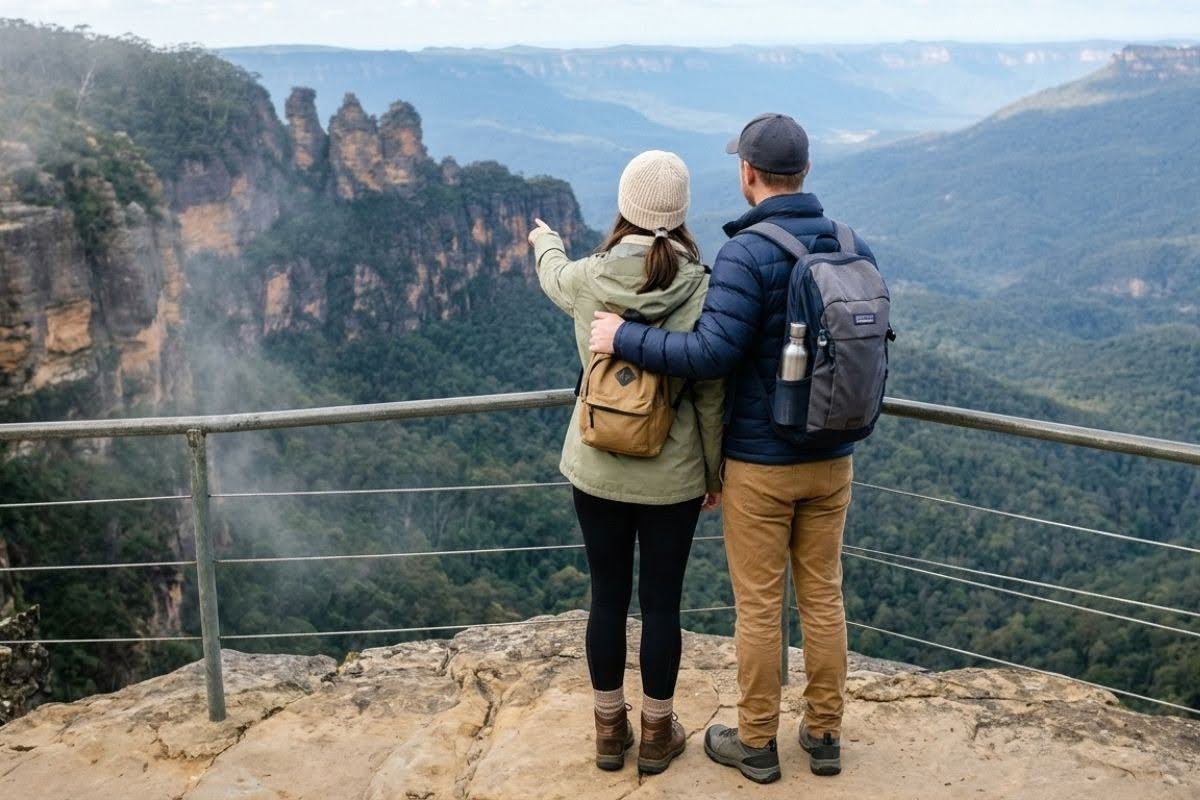
For the main lookouts and short walks, a pair of sturdy sneakers with good grip is fine. You don’t need hiking boots to visit Echo Point or the Three Sisters.
When you need hiking boots
Hiking boots are worth it if you’re:
- Doing a long valley walk, like the National Pass
- Walking on wet rock near waterfalls
- Visiting in winter, when tracks are frosty or muddy
- Carrying a heavier pack for a full day out
Quick tip: Bought new boots for your trip? Wear them for a few days before you go. Blisters on 900 steps are no fun at all.
Add a pair of good walking socks too. Wool or sports socks help stop rubbing and keep your feet dry.
From Trail to Dinner: What to Wear in the Evening
Staying the night? The towns of Leura, Katoomba and Blackheath are full of cosy cafés, pubs and restaurants.
You don’t need a full change of clothes. A few smart swaps can take you from the trail to the dinner table.
Easy evening outfit ideas
- Swap your hiking pants for dark jeans, smart pants or a warm dress with tights.
- Keep your cosy jumper or quarter-zip on. It works for both the trail and dinner.
- Add a warm coat or puffer jacket for the walk back.
- Change into ankle boots or clean sneakers.
- Finish with a scarf for extra warmth and style.
Quick tip: Pack pieces that mix and match. A few tops and one pair of pants can make several outfits and save space in your bag.
Jeans are fine for dinner in town. Just keep them off the walking tracks, especially when it’s wet.
What to Pack in Your Daypack
What you carry matters as much as what you wear. A small backpack of 15–20 litres is the right size for a day out.
It’s big enough for your layers, water and snacks. But it’s still light enough to carry up and down the steps.
Your daypack checklist
- Water: at least 1.5 litres per person, more in summer
- Sunscreen: SPF 50+
- Hat: wide-brim for sun, beanie for cold
- Rain jacket or light waterproof shell
- Insect repellent, especially for valley walks and evenings
- Snacks like muesli bars or trail mix
- A portable phone charger
- A basic first aid kit with a compression bandage
- A map or downloaded track notes
Quick tip: Don’t count on finding water or food on the trail. Cafés are easy to find in town, but there’s nothing once you start walking.
A phone charger is a must. The views are made for photos, and your battery can drain fast. You’ll also want power if you need help.
Bushwalking Safety Tips
The right clothes help keep you safe, not just comfy. The bush is beautiful, but it’s also wild.
Did you know?
NSW National Parks reports that about 130 bushwalkers get lost or need rescuing each year (Best of the Blue Mountains).
A few simple habits can keep you out of trouble:
- Tell someone your plans. Let a friend or your hotel know which track you’re on and when you’ll be back.
- Check track alerts. Tracks can close because of fallen trees, landslides or floods. Check the NSW National Parks website before you go.
- Check the forecast. Some tracks get much more dangerous when they’re wet.
- Stay on the marked track. There are cliffs and steep drops that you might not see.
- Wear long, loose pants. They protect your legs from scratches, bugs and snakes.
Warning: Mobile coverage is patchy in many valleys. Download a map before you go, and don’t rely on your phone to find your way.
What to Leave at Home
Packing smart also means knowing what not to bring. Here’s what causes the most trouble:
- Sandals and thongs. Not safe on any track.
- Heavy backpacks. A big pack on hundreds of steps is hard work.
- Jeans for hiking in winter. Cold, heavy and slow to dry.
- Valuables and fancy jewellery. Leave them at your hotel so you don’t have to worry.
- Brand-new shoes. Always break them in first.
Prefer Not to Plan It All? Join a Guided Tour
Working out routes, timing and transport can take the fun out of a trip. A guided day tour takes care of all that for you.
Your guide knows the best lookouts, the safest tracks and what the weather is doing that day. All you need to do is dress in layers and bring your daypack.
Book your Blue Mountains tour today and spend your day enjoying the views, not checking maps.
Frequently Asked Questions
Do I need hiking boots for the Blue Mountains?
Not for most visits. Sturdy sneakers with good grip are fine for the main lookouts and short walks. Wear boots for long, steep or wet tracks.
Does it snow in the Blue Mountains?
Sometimes, mostly in Katoomba and higher areas between June and August. It’s rare, so don’t count on it. Frost and mist are far more common.
Can I wear jeans to the Blue Mountains?
Yes, for sightseeing in town or dinner. But avoid them for bushwalks, especially in winter. They’re heavy and stay cold when wet.
What should I wear on a day tour from Sydney?
Wear comfy layers, enclosed shoes with grip and a hat. Pack a rain jacket, sunscreen and water. Expect it to be cooler than Sydney.
How much water should I bring?
Bring at least 1.5 litres per person for a day of walking. Take more in summer, as there are few places to refill on the tracks.
What’s the best season to visit?
Every season has something special. Spring and autumn are mild and great for walking. Winter brings misty views and fewer crowds.
Final Word
Dressing for the Blue Mountains is easy once you know the secret: layers, good shoes and sun protection.
Pack a rain jacket, check the forecast and bring plenty of water. Then all that’s left is to enjoy one of Australia’s most stunning places.