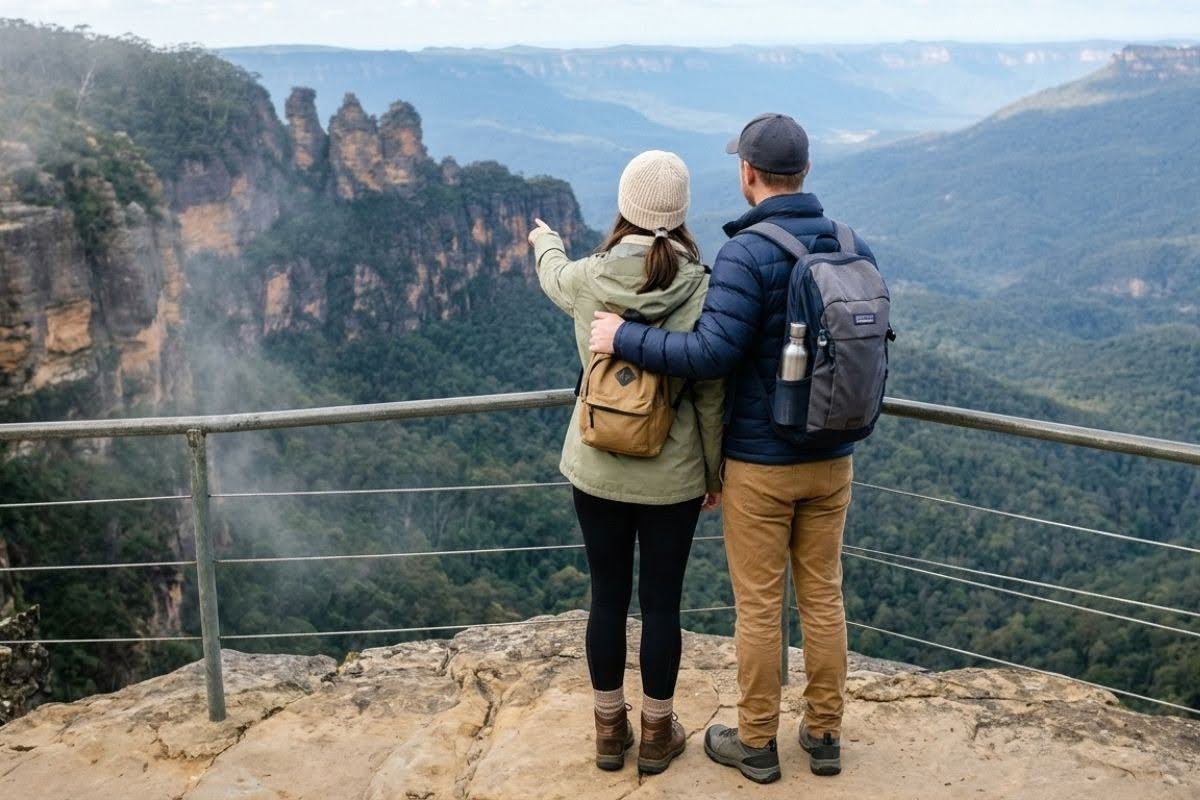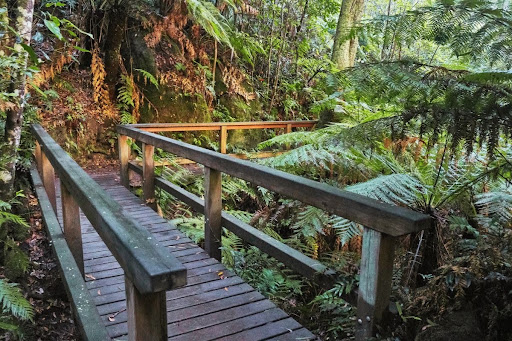
Thinking about tackling the Grand Canyon Walk in the Blue Mountains? You’ve picked one of the best short bushwalks in New South Wales.
This trail takes you deep into a fern-lined slot canyon, past waterfalls, and through sandstone corridors carved over millions of years. It’s a completely different experience to the clifftop lookouts the Blue Mountains are usually known for.
The good news is that you don’t need special gear or advanced fitness to do it. You just need to know a few things before you set off.
This guide covers everything from parking and timing to safety, photo spots, and what to do once you’ve finished the walk.
Key Takeaways
- The loop is 6.5km, Grade 3, and usually takes 2 to 4 hours.
- There are three car parks: Neates Glen, Grand Canyon Loop, and Evans Lookout.
- Never enter the canyon during or straight after heavy rain, since the creek can flash flood.
- Phone signal drops out completely inside the canyon, so tell someone your plans first.
- Bring a torch, even during the day, for the short tunnel section.
Why the Grand Canyon Walk Is Worth Your Time
The Grand Canyon Walk sits near Blackheath, about two hours from Sydney. It’s part of the World Heritage-listed Blue Mountains National Park.
What makes it different from other Blue Mountains walks is the feeling of descent. Instead of walking along a clifftop, you drop below the plateau into a hidden, fern-covered world.
Quick Stat: The track was opened in 1907, making it more than a century old. It was one of the very first marked walking trails in the Blue Mountains.
Despite its age, the trail has been kept in excellent condition. A $4.8 million restoration project, completed after almost a decade of work, upgraded the steps and pathways throughout the canyon.
That history is part of the charm. You’re walking a route that bushwalkers have used since before the First World War.
Quick Stats
Before you plan your day, here’s what you need to know at a glance.
| Detail | Information |
| Distance | 6.5km circuit |
| Time | 2 to 4 hours |
| Grade | 3 (moderate) |
| Elevation change | 350 to 425 metres |
| Start/finish | Evans Lookout Road, Blackheath |
| Dogs | Not permitted |
Quick Stat: The Grand Canyon Track is visited by more than 90,000 people every year, making it one of the most popular walks in the entire Blue Mountains National Park.
That popularity is well earned, but it also means a bit of planning goes a long way if you’d rather avoid the crowds.
Getting to the Trailhead
Most visitors drive, but you don’t have to.
Driving
From Sydney, join the M4 and follow it as it becomes the A32. Continue through the mountains until you pass the Hydro Majestic Hotel, then look for the turn-off signposted to Evans Lookout.
The drive takes around 1 hour and 30 minutes from central Sydney.
Public Transport
If you don’t have a car, take the train from Sydney to Blackheath Station. From there, it’s a short walk to a bus stop on the Great Western Highway, where the 698 bus runs toward the trailhead.
The full trip takes around 3 hours each way, so it’s a longer option, but it works well if you’re not driving.
Tip 1: Know Your Three Car Park Options
There are three car parks along Evans Lookout Road, and it genuinely doesn’t matter which one you choose. The loop connects them all.
| Car Park | Distance to Trailhead | Facilities | Best For |
| Neates Glen | At the trailhead | None | A gentler start into the canyon |
| Grand Canyon Loop | Central, 600m from Evans Lookout | Toilets | Splitting the walk evenly either way |
| Evans Lookout | At the trailhead | Toilets | Finishing with the best views |
Starting and finishing at different car parks is fine too, as long as you’re walking with someone who can shuttle a second car.
Tip 2: Decide Your Direction
This is where most guides disagree, so it’s worth understanding the trade-off.
Walking from Neates Glen toward Evans Lookout gives you a gentler descent into the canyon. The steeper climb comes near the very end, but you’re rewarded with sweeping Grose Valley views right as you finish.
Walking the other way means you see the views first, then finish with a long, flat stretch back to the car. Some hikers prefer this because the climb out feels less steep overall.
Quick Tip: If you want a proper reward at the end of the walk, start at Neates Glen and finish at Evans Lookout. If you’d rather get the views out of the way early, do it in reverse.
Either direction covers the same distance and the same canyon highlights. It really comes down to whether you want your big view at the start or the finish.
Tip 3: Time Your Visit to Avoid Crowds
Given how popular this walk is, timing makes a real difference to your experience.
Weekends and school holidays are the busiest times. If you can, aim for a weekday morning instead.
Warning: Because this is one of the most visited walks in the park, narrow sections like the tunnel and stepping-stone crossings can create small queues on busy days.
Starting early also means cooler temperatures for the climb out, which is the most physically demanding part of the walk.
Tip 4: Check the Weather and Trail Alerts Before You Go
The canyon floor follows Greaves Creek, and that creek can rise quickly after rain.
Warning: Never enter the canyon during or immediately after heavy rain. The creek can flash flood, and the sandstone steps become extremely slippery.
Before you leave home, check the NSW National Parks and Wildlife Service website for any track alerts or closures. Trails in this region occasionally close after storms or fire activity.
It only takes a few minutes, and it can save you from turning up to a closed or unsafe trail.
Tip 5: Pack for Changing Canyon Temperatures
The temperature inside the canyon can feel completely different to the temperature at the car park.
Because you’re walking below the tree canopy and surrounded by damp rock, the canyon stays noticeably cooler than the exposed clifftop, even in summer.
Here’s what’s worth packing:
- Layers — you’ll likely add and remove them a few times during the walk
- Water — at least 1 litre per person, more if it’s a hot day
- Sturdy, grippy shoes — the steps are often wet, even on dry days
- Sun protection — for the exposed sections near Evans Lookout
- A basic first aid kit — small scrapes are common on the rockier sections
- Snacks — the walk takes longer than it looks on paper
None of this needs to be expensive gear. Comfortable, enclosed shoes with decent tread make the biggest difference of anything on this list.
Tip 6: Bring a Torch for the Tunnel Section
Partway through the walk, the track passes through a short, narrow tunnel cut into the rock.
It’s not long, but it is genuinely dark inside. A torch, or even your phone’s flashlight, makes this section far easier to navigate.
Quick Tip: If you’re planning to do the night glow worm walk as well, bring a proper head torch rather than relying on your phone battery.
It’s a small thing to pack, but it’s one of the most commonly forgotten items for this particular walk.
Tip 7: Watch Your Footing on the Wet Steps
The Grand Canyon Walk includes roughly 1,000 steps in total, spread across both the descent and the climb out.
Because the canyon stays damp, sandstone steps can be slippery even without recent rain. Moss and moisture build up naturally in shaded areas.
Handrails are in place on the steeper sections, so use them, especially if you’re carrying a backpack or camera gear.
Take your time on the way down. Rushing on wet stone is where most minor slips happen.
Tip 8: Know You’ll Lose Phone Signal
Once you’re inside the canyon, mobile reception drops out almost completely.
This isn’t unusual for the Blue Mountains, but it catches first-timers off guard. Don’t rely on your phone for navigation once you’re on the trail.
Warning: Tell a friend or family member which walk you’re doing and roughly when you expect to finish, especially if you’re hiking alone.
Downloading an offline map before you leave home is a smart backup, even though the trail itself is well signposted and hard to lose.
Tip 9: Check Your Fitness Level and Family Suitability
This walk is graded moderate, and that grading is fair. It’s not a stroll, but it’s manageable for most people with a reasonable level of fitness.
With around 1,000 steps and a genuine climb at the end, it’s not ideal for prams, wheelchairs, or very young children.
If you’re hiking with kids, look for ones who are used to longer walks and comfortable on stairs. Older children generally handle this trail well.
Take breaks where you need them. There’s no rush here, and the whole point of the walk is to enjoy the scenery, not race through it.
Tip 10: Try the Night Walk for Glow Worms
If you’ve done the walk by day and loved it, consider coming back after dark.
The Grand Canyon is home to thousands of glow worms, and it’s considered one of the most spectacular night walks in the Blue Mountains.
This isn’t an easy-access glow worm site. You’ll be walking the same steep trail in the dark, then climbing back out afterwards. It’s an adventurous option, not a casual one.
Warning: If you’d rather see glow worms without the steep descent and climb, look for an easier site instead. This walk suits confident, prepared hikers only.
Bring a head torch with a red light setting if you have one, since white light disturbs the glow worms. Turn off all lights once you reach a good spot, and give your eyes a few minutes to adjust.
The best viewing tends to be found a little over a kilometre in from Evans Lookout, where the colonies cluster densely along the canyon walls.
No Dogs, and Other Rules to Know
A few practical rules are worth knowing before you set off.
Dogs aren’t permitted anywhere on the track, since it sits within the national park.
Toilets are available at both the Grand Canyon and Evans Lookout car parks, but they’re non-flush facilities, so come prepared.
There’s no drinking water available at any of the car parks, so bring everything you need with you.
What to Expect Along the Trail
Once you start descending, the open bushland quickly gives way to a completely different world.
The first stretch takes you down a series of well-built steps, deeper and deeper into green, fern-covered walls. After about 750 metres, the canyon starts to feel noticeably lush and cool.
You’ll reach the canyon floor and begin crossing Greaves Creek on a series of stepping stones. Some sections have larger, uneven rocks, but nothing technical.
At the heart of the canyon sits The Rotunda, a dramatic rock overhang where the cliff curves into a natural shelter above a sandy creek bed. It’s one of the best spots on the whole trail to simply stop and listen to the water.
Continuing on, you’ll pass small waterfalls, walk through the short rock tunnel, and cross a section where the path runs directly beneath a larger waterfall. Expect to get a little wet here.
From this point, the trail begins its climb back to the plateau. The vegetation dries out, the canyon walls open up, and you’ll pass wide, railed ledges with views down into the narrowest part of the canyon.
The final climb is the most demanding section, but it’s broken up with flatter stretches, so it never feels relentless.
Best Photo Spots Along the Trail
If you’re bringing a camera, a few spots consistently produce the best shots.
- The fern-lined staircase near the start of the descent — often called the most photographed spot on the trail, especially in soft morning light
- The waterfall you walk beneath — a dramatic shot looking back through the falling water
- The Rotunda — the scale of the overhang photographs well with a person standing inside it for size reference
- The stepping-stone creek crossings — great for a reflective, symmetrical shot along the water
- The railed ledges near the top of the climb out — your best chance at a wider Grose Valley view
Quick Tip: Overcast days actually work better for photography inside the canyon. Harsh midday sun creates strong shadows against the sandstone walls.
If you’re chasing that famous fern-covered staircase shot, arrive early. It’s one of the busiest single points on the whole trail.
How It Compares to Other Blue Mountains Walks
If you’re deciding between a few options, here’s how the Grand Canyon Walk stacks up.
| Walk | Distance | Grade | Highlight |
| Grand Canyon Walk | 6.5km | 3 | Slot canyon, waterfalls, The Rotunda |
| Wentworth Falls (to base) | 4km | 3 | Walking behind a major waterfall |
| Valley of the Waters | 6km | 4 | Seven waterfalls in one circuit |
| Prince Henry Cliff Walk | 7km | 2-3 | Clifftop views over Jamison Valley |
If you want forest and canyon scenery rather than clifftop views, the Grand Canyon Walk is the strongest pick on this list. If sweeping valley views matter more to you, the Prince Henry Cliff Walk is the gentler alternative.
Extend Your Day
There’s no need to rush straight back to Sydney once you’ve finished.
A short drive from Blackheath takes you down into the Megalong Valley, where a well-known tea house serves scones and light lunches with a view over the valley. It’s a nice way to rest your legs before the drive home.
Blackheath itself is worth a wander too. The main street has cafes, bakeries, and small galleries, making it a good spot to refuel.
If you’d rather stay overnight, Blackheath and the surrounding valley have a good range of accommodation, from cosy guesthouses to self-contained cottages.
Frequently Asked Questions
Do I need a map to do this walk?
Not really. The trail is well maintained and clearly marked throughout, so getting lost is unlikely.
Can I do this walk in trainers?
You can, but hiking shoes with better grip are recommended. The steps are often wet, and trainers can slip on sandstone.
Can I camp near the Grand Canyon Walk?
Yes, there are nearby campgrounds with lookout views, plus budget accommodation options in Katoomba if camping isn’t your thing.
Can I go canyoning at the Grand Canyon?
Yes, guided canyoning tours are available in this area for those wanting a more adventurous, hands-on experience of the canyon.
Is this walk suitable for beginners?
It’s manageable for most people with reasonable fitness, but the roughly 1,000 steps make it more demanding than a beginner-only trail.
Ready to Go With a Local Guide?
If the idea of navigating the descent, the tunnel, and the climb out on your own feels like a lot, a guided walk takes the pressure off entirely.
Our local guides know exactly when to time the crowds, where the best photo spots are, and how to make the most of the trail, including the night glow worm walk if that’s on your list.
It’s a great way to experience one of the Blue Mountains’ most iconic walks without worrying about logistics.