Most people pick a date first and check the weather later.
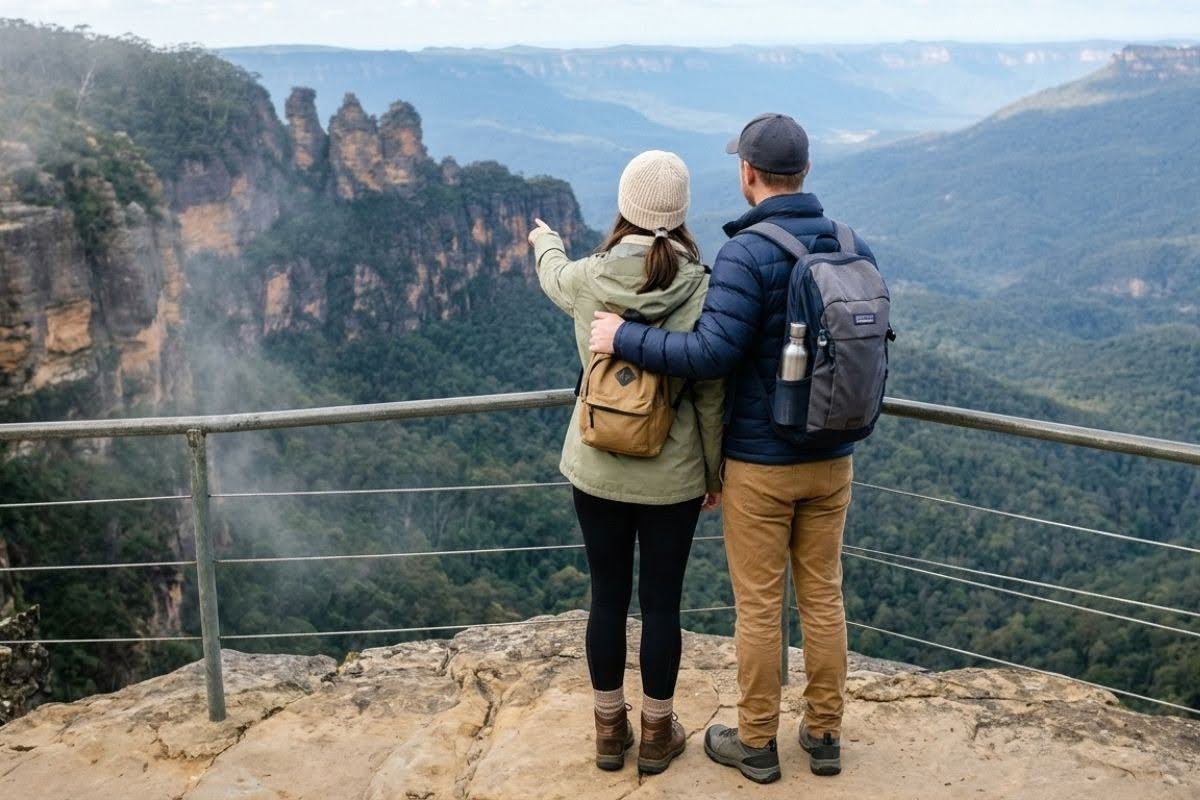
That’s backwards. Ask anyone who has stood at Echo Point in June and seen nothing but white cloud where the Three Sisters should be.
The Blue Mountains change more across the year than almost any spot near Sydney. The same lookout can be warm and golden in April, then freezing and fogged in by winter.
Crowds swing just as hard. A quiet Tuesday in May feels nothing like the same trail during April school holidays.
So the best time to visit the Blue Mountains isn’t one month. It depends on whether you want autumn colour, thundering waterfalls, empty trails or long summer days.
This guide breaks down all twelve months. For each one you’ll get real temperature and rainfall figures, how busy it gets, what’s actually happening in the landscape, and the honest downside.
You’ll also find the two things most guides skip: when the views disappear behind fog, and how school holidays quietly decide how crowded your day will be.
Read it once, pick your month, and book with confidence.
The Short Answer
For the best weather: April and October. Mild days, low rainfall, comfortable walking.
For autumn colour: late April to May.
For waterfalls: September to November, after the winter rain.
For fewest crowds: May and August.
For frost, mist and cosy fires: June and July.
There’s no bad month. There’s just the wrong month for what you want.
Understanding the Blue Mountains Climate
This catches out almost every first-time visitor.
Katoomba sits about 1,017 metres above sea level. That height changes everything.
The Blue Mountains climate is classed as oceanic, which means mild summers and cool to cold winters. It’s temperate, not alpine.
Temperatures run roughly 7°C cooler than Sydney, and misty days are common.
Source: Blue Mountains Australia — Weather and Climate
So a warm Sydney morning can turn into a cold, windy afternoon at Echo Point. People arrive in shorts and end up shivering.
💡 Quick Tip Check the forecast for Katoomba, not Sydney. They’re only 100km apart, but they behave like two different places.
Blue Mountains Weather at a Glance
Here’s every month in one table. Temperatures are averages for Katoomba.
| Month | Avg High | Avg Low | Rainfall | Rainy Days | Crowds |
| January | 24°C (75°F) | 14°C (57°F) | 148mm | 16 | Very high |
| February | 23°C (73°F) | 13°C (56°F) | 210mm | 16 | Moderate |
| March | 21°C (69°F) | 12°C (53°F) | 168mm | 16 | Moderate |
| April | 18°C (64°F) | 9°C (48°F) | 87mm | 12 | High |
| May | 14°C (57°F) | 6°C (43°F) | 80mm | 10 | Low |
| June | 11°C (52°F) | 4°C (39°F) | 105mm | 12 | Moderate |
| July | 11°C (51°F) | 3°C (37°F) | 55mm | 11 | Moderate |
| August | 12°C (54°F) | 3°C (38°F) | 66mm | 10 | Low |
| September | 16°C (60°F) | 6°C (42°F) | 64mm | 10 | Moderate |
| October | 19°C (65°F) | 8°C (46°F) | 90mm | 12 | Moderate |
| November | 21°C (69°F) | 10°C (50°F) | 132mm | 16 | Moderate |
| December | 23°C (73°F) | 12°C (53°F) | 112mm | 15 | High |
Temperature and rainfall source: Bureau of Meteorology, Katoomba station 063039, 1991–2020 averages. Crowd levels are our own estimate based on NSW school holiday periods.
📊 1,309mm That’s how much rain Katoomba gets in an average year, spread across about 154 rainy days. Pack a jacket in every season.
Source: Bureau of Meteorology
Month by Month
January
Hot, busy and green. Highs sit around 24°C, which still beats a 35°C day in Sydney.
School holidays run through most of the month. Expect queues at Scenic World and a full car park at Echo Point.
The Blue Mountains Elvis Festival brings big crowds to Katoomba too.
Go early. Lookouts are quiet before 9am and packed by 11am.
February
The wettest month of the year, with around 210mm of rain.
That sounds bad. It isn’t, if you plan for it. Rain here comes in bursts, not all-day drizzle.
Crowds thin out once school goes back. The bush looks lush and the waterfalls run well.
March
Autumn starts. Days are still warm at about 21°C, but the humidity drops away.
Walking gets much more comfortable. The light softens, which photographers love.
Leaves haven’t turned yet. That comes later.
April
One of the two best months of the year.
Mild days, cool nights, and rainfall drops to around 87mm. The deciduous trees in Leura and Mount Wilson start turning gold and red.
The catch is Easter. That two-week window is one of the busiest periods all year.
⚠️ Warning Book accommodation and tours well ahead for Easter and April school holidays. Popular places sell out months in advance.
May
Quietly the best-value month.
Autumn colour peaks in the first half of May. Crowds drop off hard after the school holidays end.
Days cool to around 14°C and nights get cold. Bring a proper jacket.
You get the views without the people.
June
Winter arrives. Highs around 11°C, lows near 4°C.
Mist fills the valleys most mornings. Some days it lifts by lunchtime. Some days it doesn’t.
Yulefest begins, running through to August. Local guesthouses and restaurants serve Christmas-style feasts in the cold.
It’s the most atmospheric time of year, as long as you don’t mind missing the odd view.
July
The coldest and driest month. Highs of about 11°C, lows near 3°C, and only 55mm of rain.
Clear winter days here are spectacular. The air is sharp and you can see for miles.
Frost is common on clear mornings. Expect white ground at the lookouts and ice on your windscreen.
📊 55mm July is the driest month of the entire year, with just 55mm of rain across about 11 days. Cold, yes, but far less wet than summer.
Source: Bureau of Meteorology
August
Cold, quiet and underrated. Similar temperatures to July, with low crowds.
Wattle starts flowering across the bush, adding bright yellow to the grey-green.
Late August brings the first hints of spring. It’s a good month if you want trails to yourself.
September
Spring begins and the mountains wake up.
Wildflowers appear across the bushland. Waratahs, flannel flowers and boronia all start to bloom.
Waterfalls are strong after winter rain. Wentworth Falls and Empress Falls both look their best.
Highs climb back to around 16°C.
October
The other standout month. Warm enough to walk in comfort, cool enough not to overheat.
Rainfall stays moderate and the gardens are in full bloom. Mount Tomah Botanic Garden is worth the drive.
Birdlife is everywhere. Bring binoculars if that’s your thing.
November
Warm and lively at around 21°C, but rainfall climbs back to 132mm.
Storms become more likely in the afternoon. Start your walks in the morning.
The bush is green and the days are long. It’s a great month for a full day out.
December
Summer returns. Warm days, long evenings, and crowds building towards Christmas.
Scenic World gets very busy once school holidays start in mid-December.
Heat and bushfire risk both rise through the month.
⚠️ Warning On days above 35°C, some walking tracks close and fire danger ratings rise. Always check NSW National Parks alerts before you set out.
Blue Mountains in Summer vs Winter
These two seasons feel like completely different destinations. Here’s how to choose.
Blue Mountains in Summer
Summer runs December to February, with highs around 23 to 24°C.
The big draw is escape. While Sydney bakes at 35°C, the mountains stay comfortable.
Long daylight hours mean you can walk late into the evening. The bush is green and the swimming holes are open.
The trade-off is crowds and storms. February is the wettest month of the year, and bushfire risk rises on extreme heat days.
Best for: families, long days out, escaping city heat.
Blue Mountains in Winter
Winter runs June to August, with highs of 11 to 12°C and lows near 3°C.
July is the driest month of the entire year, which surprises people. Clear winter days here are the sharpest you’ll get.
Mist, frost and empty trails give the place a completely different mood. Yulefest brings Christmas-style dinners to local guesthouses through the cold months.
The trade-off is daylight and fog. The sun sets early, and lookouts can be clouded in for hours.
Best for: photographers, couples, anyone who wants quiet.
When the Views Disappear
Nobody warns you about this, and it’s the thing most likely to ruin your day.
The Blue Mountains are famous for mist. That mist can sit right across the escarpment and hide everything.
Katoomba only records about 80 clear-sky days a year. That’s fewer than one in four.
Source: Blue Mountains Australia — Weather and Climate
Fog is most common from May to August. It usually forms overnight and burns off through the morning.
If the lookouts are clouded in, do this instead:
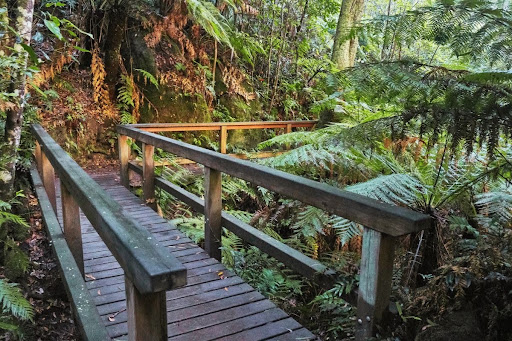
- Head down into the valley, where rainforest walks look better in mist anyway
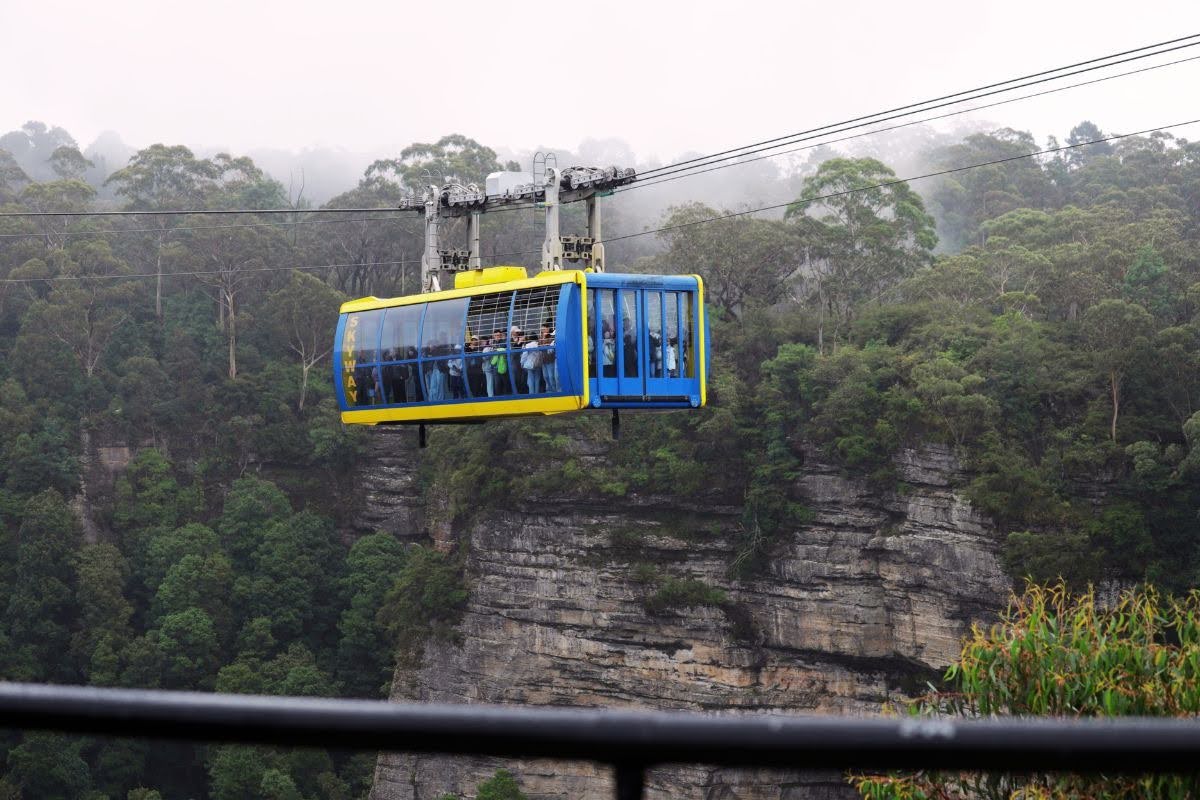
- Visit Scenic World and ride the railway through the cloud
- Spend an hour in Leura or Katoomba village
- Wait it out. Conditions often change within two hours
💡 Quick Tip Mid-afternoon is usually the clearest part of a misty day. If your morning is a write-off, don’t give up and drive home.
The Crowd Calendar Nobody Shows You
Weather is only half the story. The other half is how many people are standing between you and the view.
Crowds here don’t follow the seasons. They follow the school calendar.
NSW school holidays fall in roughly four blocks: mid-December to late January, two weeks in April, two weeks in July, and two weeks from late September.
Those blocks change everything. The same Tuesday in May feels calm. In April school holidays, it feels like a theme park.
Here’s how the year breaks down:
| Period | What to Expect |
| Mid-Dec to late Jan | Busiest stretch of the year |
| February to March | Quiet weekdays, busy weekends |
| April holidays and Easter | Very busy, book early |
| May | Quietest month with good weather |
| June to July holidays | Mixed, quiet outside the holiday block |
| August | Very quiet |
| Late Sept to early Oct | Busy again |
| Late Oct to Nov | Moderate and pleasant |
Long weekends matter just as much. Any Monday public holiday turns the lookouts into a car park.
💡 Quick Tip Visit on a Tuesday, Wednesday or Thursday if you possibly can. Midweek outside school holidays is the single biggest upgrade you can make to your trip, and it costs nothing.
How far ahead should you book?
- School holidays and Easter: three months or more
- Long weekends: six to eight weeks
- Regular weekends: two to three weeks
- Midweek off-peak: often fine a few days out
Best Time for Your Kind of Trip
Bushwalkers: April, May, September and October. Cool enough to walk for hours without overheating.
Photographers: May for autumn colour, June and July for mist and frost. Shoot at sunrise or late afternoon.
Families: October and November. Mild weather, long days, and no school holiday crush.
First-time visitors: April or October. The best chance of clear views and comfortable weather.
Couples wanting a cosy weekend: June to August. Fireplaces, Yulefest menus and quiet streets.
Budget travellers: May and August. Accommodation is cheaper and easier to book.
When to Avoid the Blue Mountains
Some periods are genuinely harder. Skip these if you can:
- The first two weeks of January. Peak crowds, peak heat, peak prices.
- Easter weekend. The single busiest weekend of the year.
- Extreme heat days. Anything over 35°C brings track closures and real fire risk.
- Long weekends. Parking near Echo Point fills by mid-morning.
More than four million people visit the Blue Mountains each year. Most of them come on the same handful of dates.
Source: Destination NSW — Blue Mountains regional statistics
Shift your trip by one week and the experience changes completely.
What to Pack
The rule is layers, in every season.
| Season | Pack These |
| Summer (Dec–Feb) | Sunscreen, hat, sunglasses, two litres of water, light evening jacket |
| Autumn (Mar–May) | Warm mid-layer, closed shoes with grip, light rain jacket |
| Winter (Jun–Aug) | Insulated jacket, gloves, beanie, non-slip shoes for frost |
| Spring (Sep–Nov) | Rain jacket for afternoon storms, layers you can strip off |
Closed walking shoes matter more than anything else on this list. Tracks get slippery fast after rain or frost.
💡 Quick Tip Always pack a head torch in winter. Daylight fades fast, and valley tracks get dark well before sunset.
Frequently Asked Questions
What is the best month to visit the Blue Mountains? April and October offer the best mix of mild weather, low rainfall and manageable crowds.
What is the Blue Mountains climate like? It’s an oceanic climate with mild summers and cold winters. Katoomba averages 24°C in January and 11°C in July, with rain spread through every month.
When do the autumn leaves change? Late April through May. Mount Wilson and Leura have the best displays.
When are the waterfalls at their best? September to November, when winter and spring rain feed the creeks.
How many days do you need? One full day covers the main lookouts and Scenic World. Two days lets you add proper walks and quieter spots.
Planning Your Visit
Pick your month based on what matters most to you.
Want clear views and easy walking? Aim for April or October. Want colour? Come in May. Want the place almost to yourself? Try August.
Whenever you come, check the Katoomba forecast the night before and pack warmer than you think you need.
The mountains reward people who plan. Choose your month well, and you’ll see why more than four million people make the trip every year.
Sources