Planning your first hike in the Blue Mountains? You’ve picked one of the best places in Australia to start.
You don’t need fancy gear or years of experience. You just need the right trail, a bit of prep, and this guide.
The Blue Mountains can feel overwhelming at first. There are hundreds of trails, dozens of villages, and endless waterfalls to choose from.
The good news is that you don’t need to see it all on your first trip. A handful of easy, well-marked walks will give you the classic Blue Mountains experience without wearing you out.
This guide breaks down the best beginner walks by area, tells you what to pack, and covers the safety basics so your first hike goes smoothly.
Key Takeaways
- Stick to Grade 1 to 3 trails for your first few hikes, and expect most beginner walks to run 1–7 km.
- The Blue Mountains is the most-visited national park in NSW, so aim for early mornings or weekdays to dodge crowds.
- Even “easy” walks often include steps, so check the return climb before you commit.
- Pack sturdy shoes, water, sun protection, and an offline map, since phone signal drops out in many valleys.
- Check trail alerts and fire bans before you head out, and always tell someone your plans.
Why the Blue Mountains Is Perfect for Your First Hike
The Blue Mountains sit just an hour or two west of Sydney. That makes it easy to reach for a day trip or a weekend away.
It’s also huge. The national park covers 2,679.54 square kilometres of protected land, so there’s no shortage of trails to explore.
Quick Stat: The Blue Mountains is the most-visited national park in NSW. It attracts around 6.4 million domestic visits a year, and that number has doubled over the past decade.
That popularity isn’t an accident. The views, waterfalls, and forest trails here are hard to beat anywhere in the world.
You’ll also be walking through Country that matters deeply to First Nations people. The Blue Mountains is significant to six groups: Dharawal, Darkinjung, Dharug, Gundungurra, Wonnarua, and Wiradjuri people. Keep this in mind as you walk, and treat the landscape with respect.
Because it’s so popular, you won’t be walking alone. But even on a busy weekend, there are quiet trails if you know where to look.
Unlike some national parks, you don’t need a car, a permit, or a guide to have a great first day out here. A train ticket and a pair of comfortable shoes will get you started.
How to Choose a Beginner-Friendly Trail
Not all Blue Mountains walks are the same. Some are flat and short. Others involve hundreds of steps and steep drops.
As a beginner, you want to look for three things: grade, distance, and time.
Understanding Trail Grades
Australia uses a simple grading system for walking tracks. It runs from Grade 1 (very easy) to Grade 5 (very hard).
| Grade | What It Means | Good For Beginners? |
| Grade 1 | Flat, wide, wheelchair-friendly paths | Yes |
| Grade 2 | Gentle hills, some uneven ground | Yes |
| Grade 3 | Some steps, moderate distance | Yes, if you take your time |
| Grade 4 | Steep sections, rough terrain | Only with some fitness |
| Grade 5 | Very steep, remote, technical | Not recommended for beginners |
Stick to Grade 1 to 3 trails for your first few hikes. You’ll still see incredible views without pushing your body too hard.
Most official trail signs and park websites list the grade right next to the walk name. Get into the habit of checking this before you leave home.
Distance and Time
Most beginner walks in the Blue Mountains run between 1 and 7 kilometres. That’s usually 30 minutes to 3 hours, depending on your pace.
Always add extra time for photos. The views here are so good, you’ll want to stop a lot.
It also helps to compare the listed time with your own walking speed. If you’re hiking with young kids or older family members, double the estimated time to be safe.
Watch Out for Steps
Even “easy” walks in this region often include staircases. Some trails, like the walk to Wentworth Falls or Minnehaha Falls, have steep steps down to the base of a waterfall.
Warning: Steps down are easy. Steps back up can be tough if you’re not used to hiking. Check the return climb before you commit.
If you have knee or joint concerns, look for trails described as “flat” or “wheelchair accessible” rather than ones that mention a “descent” or “staircase.”
Best Easy Walks by Area
The Blue Mountains is spread across several villages, each with its own cluster of trails. Here’s where to start, area by area.
Katoomba
Katoomba is the main hub, and it’s packed with easy options.
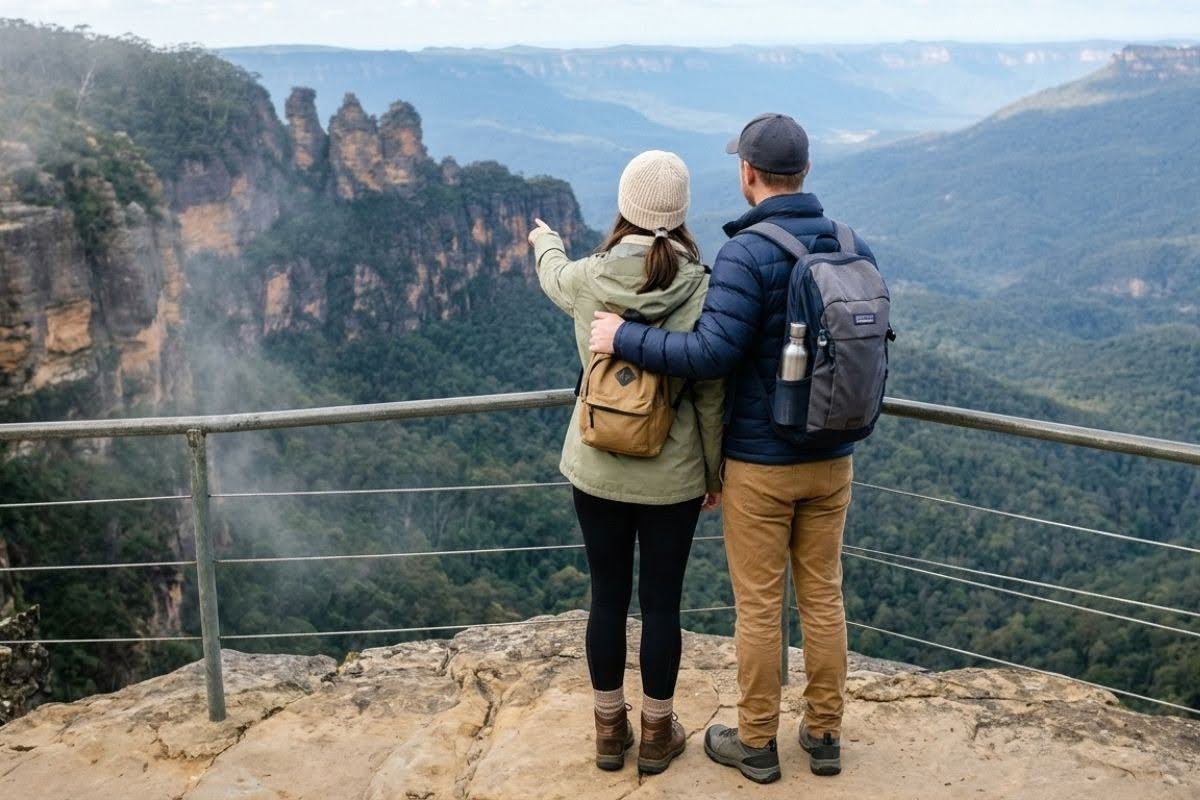
The Three Sisters Walk takes you from Echo Point Lookout down a gentle slope to a platform near the famous rock formation. It’s short, flat in most parts, and full of history for the region’s traditional owners.
The Katoomba Round Walk is another great pick. It loops past Katoomba Falls and Katoomba Cascades, with plenty of forest and waterfall views along the way.
If you’re short on time, the Katoomba Falls lookout walk is worth adding on too. It’s only a few minutes from the main car park and gives you a completely different angle on the same waterfall.
If you want a quieter experience, try the walk just after sunrise or on a weekday, since Echo Point is one of the busiest lookouts in the whole park.
Leura
Leura sits close to Katoomba but feels calmer. It’s a great choice if you want fewer crowds.
The Prince Henry Cliff Walk stretches for about 7 kilometres, but you don’t have to do the whole thing. Join and leave the trail at different points to shorten it.
This walk passes 20 lookouts over Jamison Valley and three waterfalls. It’s one of the best value-for-effort walks in the whole park.
For something shorter, Sublime Point Lookout is only 400 metres return. It takes about 30 minutes and rewards you with sweeping views that feel bigger than the short walk suggests.
Leura is also a nice spot to break up your walk with a coffee. Several cafes sit right along the main street, just a short stroll from the trailheads.
Wentworth Falls
Wentworth Falls is famous for its waterfalls, and you don’t need to hike far to see them.
The Charles Darwin Walk is an easy 2.4-kilometre track. It follows a path the naturalist himself once walked back in 1836.
Along the way, you’ll spot honeyeaters, wrens, and maybe even a black cockatoo. Rock pools and small cascades line the trail.
For a bigger reward, walk partway down toward the base of Wentworth Falls. You can turn back at the first lookout if the steps look too steep, or continue to feel the spray from the falls up close.
Blackheath
Blackheath has some of the most dramatic scenery in the region, and a few genuinely easy trails to match.
The Grand Canyon Track is a 6.3-kilometre loop through fern gullies and past small waterfalls. It’s graded moderate, but the path is well maintained and doesn’t need any special gear.
Quick Tip: The Grand Canyon Track is one of the most popular hikes in the park. Avoid weekends and school holidays if you want to skip the crowds.
If you’d rather stick to something gentler, the short walk to Pulpit Rock Lookout is only 600 metres return from the car park. It’s a big payoff for very little walking.
The nearby Govetts Leap Lookout is another spot worth pairing with your walk. It’s right at the trailhead, so you get a lookout view before you’ve even started.
Lawson and Hazelbrook
These villages get fewer tourists, which means quieter trails.
The South Lawson Waterfall Circuit is a short loop that passes several waterfalls. It’s best after rain, when the falls are flowing strong.
The Lawson Waterfall Circuit further along takes in four small falls across just 3 kilometres. It’s rated easy and works well for families.
Because these trails see fewer visitors, they’re a good choice if you’d rather avoid queues at lookouts and car parks.
Lower Blue Mountains
Closer to Sydney, the lower Blue Mountains area is less about clifftop views and more about forest and swimming spots.
Red Hands Cave near Glenbrook is a great pick. The walk passes Jellybean Pool, a popular swimming hole, before reaching Aboriginal rock art that’s thought to be around 1,600 years old.
This area is also less crowded and a good option on a hot day, since you can cool off in the water afterwards.
Because it sits closer to Sydney, this area also suits a half-day trip if you don’t have a full day free.
Top Picks for Your First Hike
If you only have time for a handful of walks, start with these. They’re beginner-friendly, well-signposted, and offer some of the best scenery in the region.
- Three Sisters Walk — short, iconic, and steeped in cultural history
- Charles Darwin Walk — easy, wildlife-rich, and close to Wentworth Falls village
- Prince Henry Cliff Walk (shortened version) — huge views for moderate effort
- South Lawson Waterfall Circuit — quiet, waterfall-packed, and easy underfoot
- Pool of Siloam — a tiny 300-metre walk to a hidden waterfall and swimming hole
Each of these can be done in under 2 hours, which makes them perfect for a first outing.
If you’re only in the Blue Mountains for one day, pick two from this list rather than trying to squeeze in more. Rushing between trails takes away from the experience.
Waterfall and Swimming Walks
Waterfalls are one of the biggest drawcards in the Blue Mountains, and many are easy to reach.
Minnehaha Falls is a short walk to a waterfall with a deep swimming hole underneath. The path has steps but comes with handrails, so it’s manageable for most fitness levels.
Pool of Siloam near Leura is even shorter. It’s only 300 metres each way, making it one of the easiest swimming spots to reach in the whole park.
After heavy rain, waterfalls in the Blue Mountains look their best. Check recent rainfall before you go if waterfalls are your main goal.
If swimming is part of your plan, bring a towel and swimwear. Many of these pools are cold, even in summer, so be ready for a shock when you jump in.
Swimming spots can also get busy on warm weekends. If you want the pool to yourself, aim for a weekday morning instead.
Best Time of Year for Your First Hike
Timing your visit can make a big difference to how enjoyable your first hike feels.
Autumn (March to May)
Mild days and fewer crowds make this a popular pick among locals.
Spring (September to November)
Similar conditions to autumn, plus wildflowers along many of the forest trails.
Summer (December to February)
Can get hot, especially on exposed clifftop walks. It’s also bushfire season, so you’ll need to check for total fire ban days before heading out.
Winter (June to August)
Cool and sometimes foggy, especially in the early morning. Fog can actually make the valley views look even more dramatic, though it does mean rugging up.
Quick Stat: The Blue Mountains has been World Heritage-listed since 2000, protecting more than 260,000 hectares of sandstone plateau and eucalypt forest.
Whatever season you visit, mornings tend to be calmer and cooler than afternoons. This makes them the best time to start most beginner walks.
Common Mistakes First-Time Hikers Make
Most beginner hiking mishaps in the Blue Mountains come down to a few avoidable errors.
Underestimating the Return Climb
Many trails feel easy on the way down, then surprise you on the way back up. Always read the full trail description, not just the summary.
Wearing the Wrong Shoes
Thongs and smooth-soled sneakers don’t grip well on wet sandstone. A basic pair of enclosed shoes with tread makes a big difference.
Not Carrying Enough Water
Even short walks can leave you thirsty, especially in summer. It’s better to carry too much water than too little.
Skipping the Trail Alert Check
Trails close for maintenance, storm damage, or fire risk. A five-minute check before you leave can save you a wasted trip.
Ignoring the Weather Forecast
Sandstone gets slippery fast in the rain, and clifftop trails aren’t fun in strong wind. Check the forecast the morning of your hike, not just the night before.
Avoiding these five mistakes will make your first hike far more enjoyable, and far safer.
Family and Dog-Friendly Options
Travelling with kids or a dog changes what “easy” looks like. Luckily, the Blue Mountains has options for both.
Most trails inside the national park don’t allow dogs. But a few walks sit just outside the boundary, which means your dog can join in.
Minnehaha Falls, for example, is outside the national park border. That makes it one of the few waterfall walks where dogs are welcome.
For families, look for walks under 3 kilometres with minimal steps. The Charles Darwin Walk and the shortened Prince Henry Cliff Walk both work well for kids.
Warning: Always check a track’s dog policy before you go. National park rules can catch new visitors out.
If you’re hiking with very young children, bring extra snacks and plan for a slower pace than the signposted time suggests.
Night Walks and Glow Worms
Not every Blue Mountains adventure needs to happen in daylight.
The Katoomba Falls Reserve Night-Lit Walk is a 1.5-kilometre track that’s lit by floodlights until 11pm. It’s suitable for all ages and gives you a totally different view of the falls and cascades.
For something more magical, some trails near Lawson and Wentworth Falls glow with tiny lights after dark. These come from glow worms living in damp, shaded areas along the path.
Turn off all torches and phone lights once you reach a glow worm spot. Your eyes need a few minutes to adjust before the lights become visible.
Night walks work best with a small group and a decent torch for the parts of the trail that aren’t lit.
What to Pack: Beginner’s Checklist
You don’t need expensive gear for your first hike, but a few basics will make the day much more comfortable.
- Sturdy shoes — runners are fine for easy trails, but hiking shoes give better grip on steps and wet rock
- Water — at least 1 litre per person, more on hot days
- Sun protection — hat, sunscreen, and sunglasses, even on cloudy days
- Snacks — something with energy, like nuts or a muesli bar
- A light jacket — mountain weather changes fast, even in summer
- Offline maps — download the trail map before you go, since phone signal drops out in many valleys
- A basic first aid kit — band-aids and antiseptic wipes cover most small scrapes
- A fully charged phone — for emergencies and photos
None of this needs to be expensive. Most beginners already own everything on this list.
If you’re planning to swim, add a towel, swimwear, and a dry bag to keep your phone and wallet safe near the water.
Safety Tips for First-Time Bushwalkers
The Blue Mountains is generally safe, but it’s still bushland. A few simple habits keep you out of trouble.
Check the Trail Is Open
Trails can close after storms, fires, or landslides. Before you head out, check the official Parks NSW website for local alerts.
Tell Someone Your Plans
Let a friend or family member know which trail you’re doing and when you expect to finish. For longer walks, you can register your trip online with the NSW National Parks and Wildlife Service.
Expect Patchy Phone Signal
Many valleys and gullies in the Blue Mountains have no phone reception at all. Don’t rely on your phone to navigate once you’re deep in a canyon or forest.
Watch the Weather
Summer brings bushfire risk. Always check for total fire ban days before you go, and avoid hiking if one is in place.
Warning: Rain can make sandstone steps and cliff paths very slippery. If it’s been raining heavily, pick a flatter, forested trail instead of a clifftop one.
Start Early
Starting your walk in the morning gives you more daylight buffer and cooler temperatures, especially in summer.
Stick to Marked Trails
It’s tempting to wander off for a better photo angle, but unmarked paths near cliff edges can be unstable. Stay on the signposted track, especially near lookouts.
How to Get There and Trail Access
Most Blue Mountains trailheads are easy to reach from Sydney, even without a car.
A direct train line runs from Sydney through the mountains, stopping at Wentworth Falls, Katoomba, Blackheath, and Mount Victoria. Trains run regularly, so you don’t need to book ahead.
From the train stations, the Blue Mountains Explorer Bus loops past most major trailheads and lookouts. This is a solid option if you don’t have a car.
Driving gives you the most flexibility, especially for trailheads further from the villages, like those along Mount Hay Road. Just note that some access roads aren’t sealed, so check conditions in wet weather.
| Getting There | Best For |
| Train | Village-based walks like Katoomba, Leura, Wentworth Falls |
| Blue Mountains Explorer Bus | Hopping between multiple trailheads in one day |
| Car | Trails further from town centres, more flexibility |
Whichever way you travel, allow extra time. Roads through the mountains can be slow, especially on weekends.
A Simple First-Timer Itinerary
If you’re not sure how to piece your day together, here’s a simple plan that works well for beginners.
Morning: Start at Echo Point in Katoomba and walk the Three Sisters Walk. Grab a coffee nearby afterwards.
Midday: Head to Leura and walk a section of the Prince Henry Cliff Walk, stopping at a few lookouts.
Afternoon: Head to Wentworth Falls for the Charles Darwin Walk, or the walk partway down to the falls if you have energy left.
Evening: If you’re staying overnight, finish with the Katoomba Falls Reserve Night-Lit Walk for a completely different view of the falls after dark.
This combination covers three different villages, several lookouts, and one waterfall, all without pushing past Grade 3 trails.
Thinking About a Guided Walk Instead?
Solo hiking is rewarding, but it’s not for everyone on their first outing.
If you’d rather not worry about navigation, timing, or track conditions, a guided walk takes the pressure off. You get local knowledge, a set pace, and someone who already knows which lookout to hit at sunset.
That’s exactly what our Blue Mountains guided walking tours are built for. We handle the route planning and local know-how, so you can just focus on enjoying the scenery.
It’s a good middle step between reading a blog and heading out completely on your own, especially if this is your first time bushwalking in Australia.
FAQs
How fit do I need to be for Blue Mountains hikes?
Most beginner trails don’t require much fitness. If you can walk for an hour at a normal pace, you’ll manage a Grade 1 to 3 trail comfortably.
Are the walks safe for kids?
Many are. Look for short, flat trails without cliff edges, like the Charles Darwin Walk or the shortened Prince Henry Cliff Walk.
What’s the best time of year to hike?
Autumn and spring offer the mildest weather. Summer can be hot and carries bushfire risk, while winter mornings can be cold and foggy.
Do I need a permit to hike in the Blue Mountains?
No permit is needed for day walks on marked trails. Overnight or multi-day hikes may require you to register your trip or book a campsite.
Can I bring my dog?
Most trails inside the national park don’t allow dogs. A few walks just outside the park boundary, like Minnehaha Falls, do allow them.
How many walks can I fit into one day?
Two to three short walks is a realistic target for beginners. Trying to fit in more usually means rushing, which takes away from the experience.
Ready for Something Tougher?
Once you’ve knocked over a few of these beginner trails, you might want more of a challenge.
Walks like the Ruined Castle, the Grand Cliff Top Walk, or the multi-day Six Foot Track are natural next steps. They’re longer, steeper, and reward you with even bigger views.
But there’s no rush. The beauty of the Blue Mountains is that it rewards you at every level, whether you’re doing a 20-minute stroll or a three-day trek.
Start easy, build confidence, and let the mountains do the rest.